Premiere: December 5, 2019
Playwright: Tadeusz Słobodzianek
Translated from Polish by Rolandas Rastauskas
Director: Oskaras Koršunovas
Set Designer: Gintaras Makarevičius
Costume Designer: Aleksandra Jacovskytė
Puppet Designer: Julija Skuratova
Composer: Gintaras Sodeika
Choral Director: Alfonsas Vildžiūnas
Video Projection Designer: Mikas Žukauskas
Lighting Designer: Julius Kuršys
Assistant Director: Marius Pažereckas
Assistant Directors: Urtė Sėjūnaitė, Augtumas Danielius Harner, Deivydas Valenta
Cast:
Dora – Justina Vanžodytė
Zocha – Eglė Jackaitė
Rachelka, later Mariana – Regina Šaltenytė / Eglė Barauskaitė
Jokūbas Kacas – Jonas Viršilas
Rysekas – Jonas Baranauskas
Menachem – Vaidas Jočys
Zygmunt – Igoris Reklaitis
Vladek – Aurimas Pintulis
Abraham – Mikalojus Urbonas
Henek – Liudas Vyšniauskas
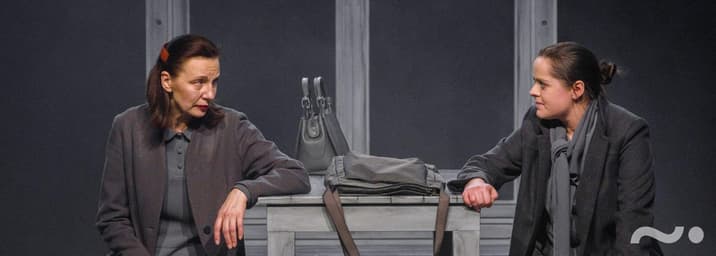
In 1941, something almost unimaginable took place in the small Polish village of Jedwabne: the local Jews, residents of Jedwabne, were locked in a barn and burned alive. Their killers were not monsters from hell, but ordinary people—Jewish neighbors and classmates who may once have sat at the same desk. They had played together, gotten into mischief, and dreamed together about what they would become when they grew up.
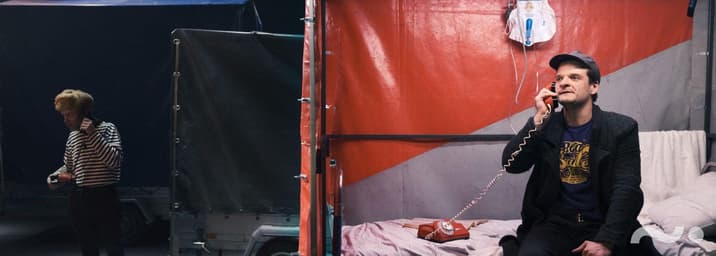
“Our Class” is not your typical play about good and evil, about victims and executioners. Here, every character deserves at least a little human compassion. And each carries the ever-heavier burden of their own life’s mistakes. From childish showing off and a reluctance to see another person as an equal to mass murder—the path is not as long as it might seem.
The action of T. Słobodzianek’s play *Our Class* spans a long period of time—from 1925 to the present day. Eighty years—material of this scope in literature would typically call for an epic novel. T. Słobodzianek managed to condense it into a short play, using the lives of a single class of students to depict the entire 20th century. He does not attempt to condemn or justify anything—he simply narrates the complex lives of people in an impartial voice, and that narrative becomes universal, speaking to human nature, to the past of all humanity, the present, and—unfortunately, but quite plausibly—the future.
“I don’t know where this story begins. I know where it doesn’t end.” T. Słobodzianek
WARNING: Smoking, strobe lights, and sound effects are used during the performance.