
THE JOURNEY

Description
A three-act opera with a prologue and epilogue in English, Spanish, and Latin
Libretto by David Henry Hwang, based on a story by Philip Glass
Premiere: October 12, 1992, at the Metropolitan Opera in New York to mark the 500th anniversary of the discovery of America
“The Journey” is an allegory about the spirit of exploration, about the state of being without a place, which we find ourselves in whenever different cultures collide. What drives people to travel, and what are they searching for? Characters from the past and the future find different answers, including a scientist who travels across the entire universe while confined to a wheelchair. Christopher Columbus embodies all those eternal wanderers—Ulysses, Noah, the Flying Dutchman—who were either cursed or called to wander, alone on their ships, obsessed with an idea; his figure symbolically encapsulates all travelers—those driven by a desire to explore and ask questions.” (Philip Glass, 1992)
P. Glass (b. 1931 in Baltimore, Maryland, USA) is today recognized as one of the world’s most iconic, influential, commercially successful, and prolific composers. At the beginning of his independent creative career, starting in the mid-1970s, P. Glass developed a distinctive, instantly recognizable style, which he termed “music with repeating structures,” characterized by the constant repetition of rhythmic patterns that are gradually lengthened or shortened, tonal harmony and static dynamics, a process-oriented approach, and an economy of expressive means. These features, particularly during the early, radical period of his career, were identified with the Minimalist movement, and Philip Glass is considered one of the four pioneers of this avant-garde style, alongside La Monte Young, Terry Riley, and Steve Reich. Over time, minimalism became, as it were, the common language of postwar American culture—understood and recognizable—gaining legions of fans and followers around the world. However, the composer himself has always shunned the “minimalist” label attached to him, calling himself a “classicist,” and his steadily expanding repertoire of works across various genres reveals rather “maximalist” ambitions and unprecedented productivity, comparable only to the greatest Baroque geniuses.
The composer’s body of work includes more than thirty operas—counting not only those intended for the grand opera stage but also chamber operas, film operas, musical theater, and other staged works across various genres. The most famous and innovative of these is the very first opera created by Philip Glass in collaboration with set designer and director Robert Wilson, *Einstein on the Beach* (1975–1976), whose American premiere at the Metropolitan Opera in New York shook the foundations of traditional opera, defined a new conception of the genre, and instantly brought fame to its creators, who had previously been known only to a small circle of New York experimental art enthusiasts. As if acknowledging the opera’s incredible success, a decade later the theater commissioned Philip Glass to compose a new opera to mark the upcoming 500th anniversary of the discovery of America. A further sign of recognition was the substantial fee paid to the composer—the largest ever paid for a new opera.
The premiere of the opera *The Voyage* at the Metropolitan Opera was scheduled for the exact day in 1492 when Christopher Columbus set sail westward in search of a new route to East Asia, and five weeks later, land was sighted—on Monday, October 12, 1992. Despite the grand occasion, documentary realism on the musical theater stage was never the composer’s goal. “The opera house is the arena of poetry par excellence—a place where one need not adhere to the rules of historical research, and where the artists’ imagination helps to discover a completely different truth,” he asserted. For the composer, the discovery of America became merely a pretext for an allegorical narrative—a much broader reflection on humanity’s eternal desire to explore, understand, and discover, about the motivations that drive people to ask questions and discover new things—not only in a geographical sense, but also in a spiritual and intellectual sense. Playwright David Henry Hwang, brought in to assist, expanded on this allegory and created a highly poetic, rather abstract libretto, weaving in elements of science fiction, historical allusions, and grotesque details from contemporary life.
The narrative of this three-act opera with a prologue and epilogue is non-linear—the time and place of the action are constantly shifting. In the prologue, we see a Scientist exploring the farthest corners of the universe but completely unable to control his own body. His prototype was the renowned physicist and cosmologist Stephen Hawking. Columbus appears in the opera only in the second act, and he is allotted just two days of his journey to the New World—first, when Queen Isabella of Spain solemnly bids him farewell, accompanied by courtiers from the royal court who list the titles bestowed upon him, and the last, filled with doubts about his mission and nightmarish visions. An even gloomier mood torments him as he lies on his deathbed (epilogue), reflecting on his life and repenting that the clash between the Old and New Worlds, which he provoked, claimed the lives of countless indigenous people. We never actually see them in the opera, because the scene of the clash with the indigenous people (ape-men) takes place in the primitive world of the first act, where a crew of aliens from deep space arrives in a spaceship, having managed to escape the black hole devouring their home planet. The third act takes us into the future—it’s a science-fiction caricature featuring a procession of politicians and high-ranking officials with their entourages heading toward the spaceship, aboard which humanity is once again setting out in search of new worlds and in search of new forms of life…
It seems as though fate itself decreed that *The Journey* would become the first opera by Ph. Glass to be staged in Lithuania, marking the opening of the Klaipėda State Music Theater’s first season in its new venue. Its new stage design was created by a creative team selected through an international competition, consisting of young Italian artists—Chiara Osella (direction), Carlo Massari (direction and choreography), Eleonora Peronetti (set design), and Emilia Zagnoli (costumes)—as well as the Klaipėda State Music Theater’s regular visual designers, Linartas Urniežis (video projections) and Andrius Stasiulis (lighting). Maestro Dante Santiago Anzolini (Argentina–U.S.), who was specially invited to serve as musical director, who could not refuse the invitation to return to the theater where, three decades ago, he staged Verdi’s *La Traviata*, which has since become a legend in the port city. He shares a long-standing friendship and creative collaboration with composer Philip Glass, having staged his operas and conducted his symphonies.
Sponsor of the premiere:
AWARDS
“Mask of Gratitude” (March 27, 2025, Klaipėda) for the Klaipėda State Music Theater’s production “The Journey” (Production of the Year)
Map
Other
More events
Theatre
THE VIOLINIST ON THE ROOF
Theatre
Sand Chaconne
Theatre
PRIMA DONNA

Theatre
The thrush—a green bird
Event
Matilda
Theatre
Mamma mia!
Theatre
Kaip gyveni, Opera?
Event
A STORY WITHOUT A TITLE
Excursion
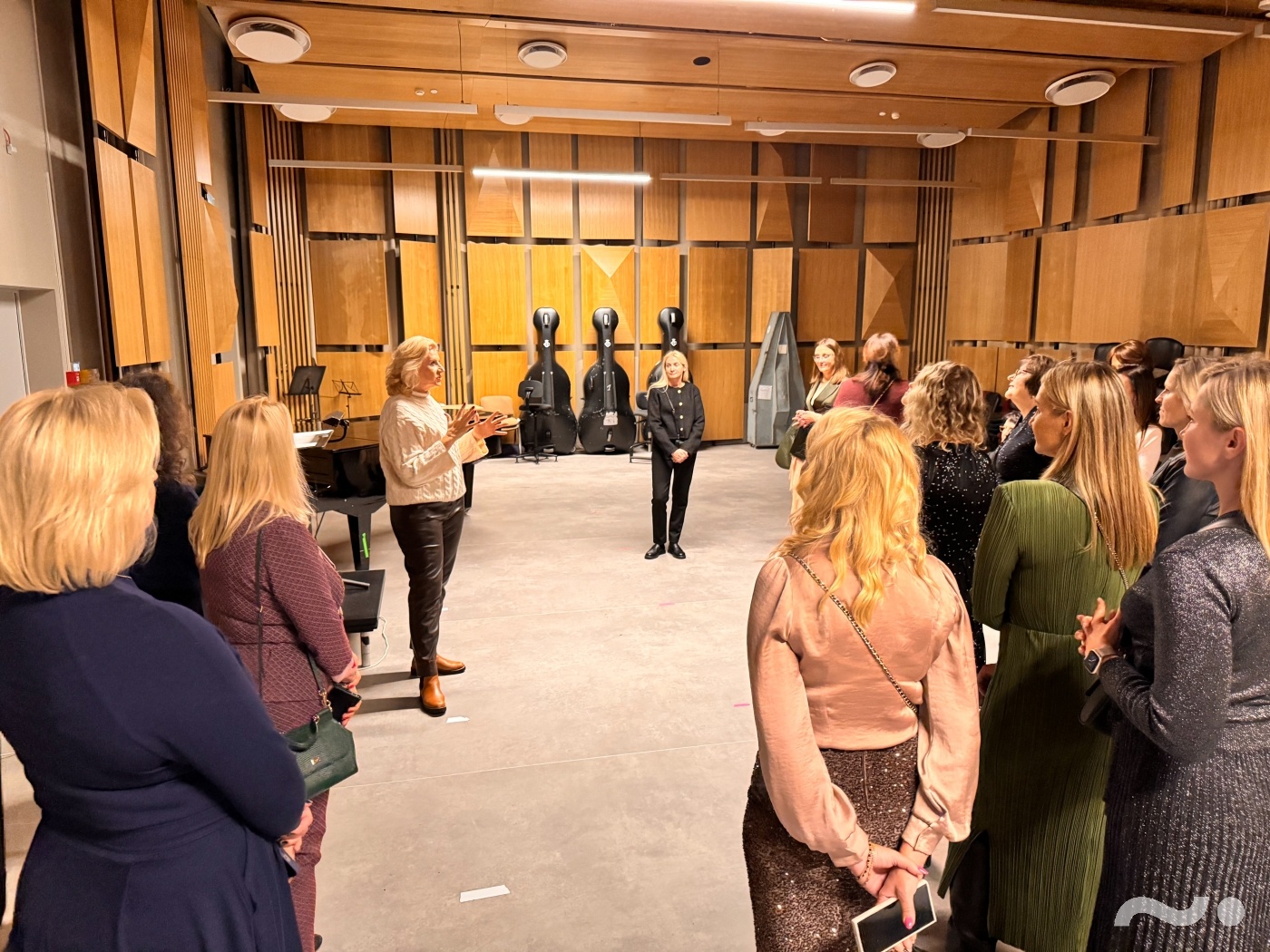
A Look Behind the Scenes at the Theater
Event
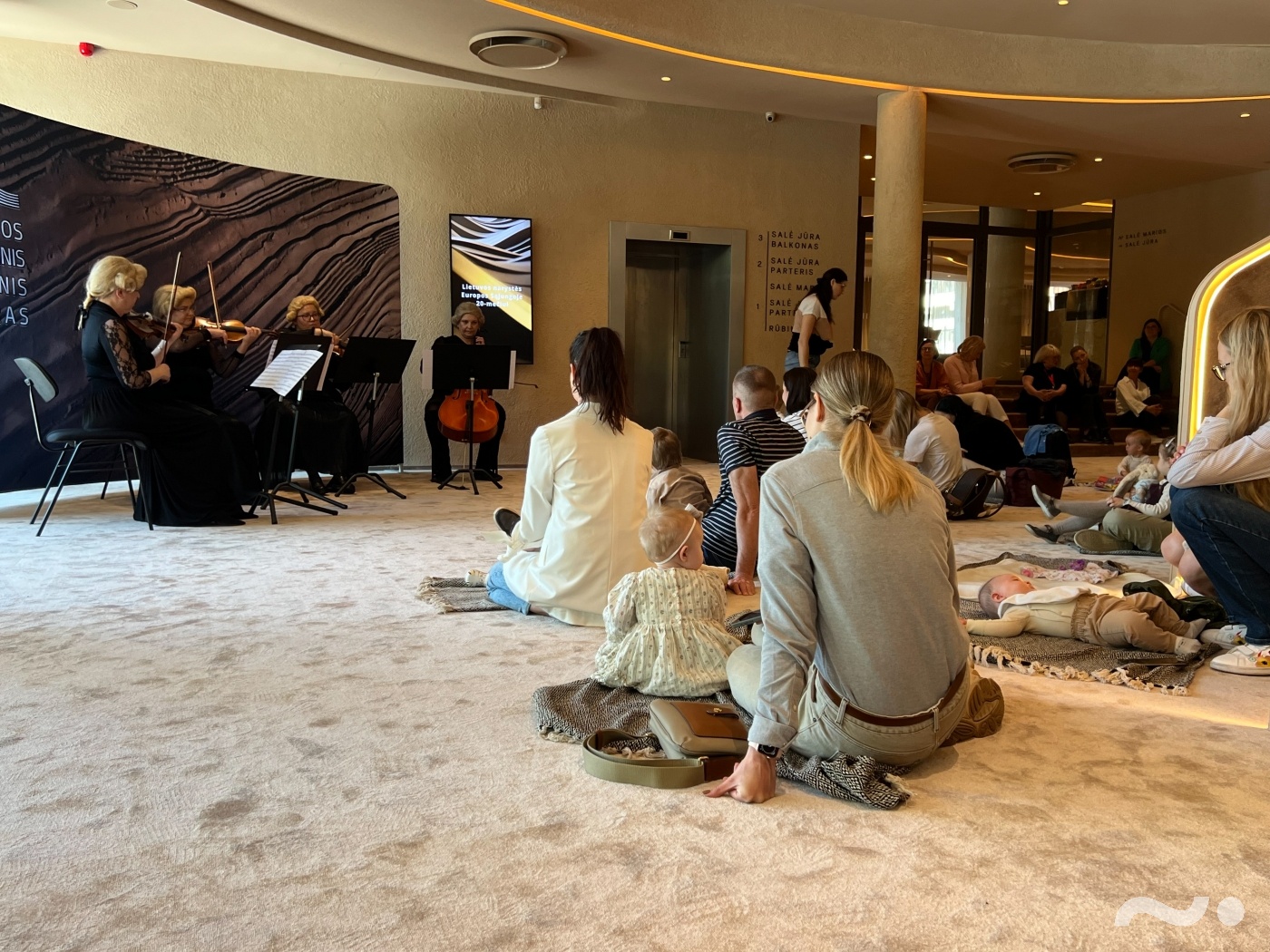
Little Mozart
Dance
A Trilogy of Dance Performances: (E)MOTION

Event