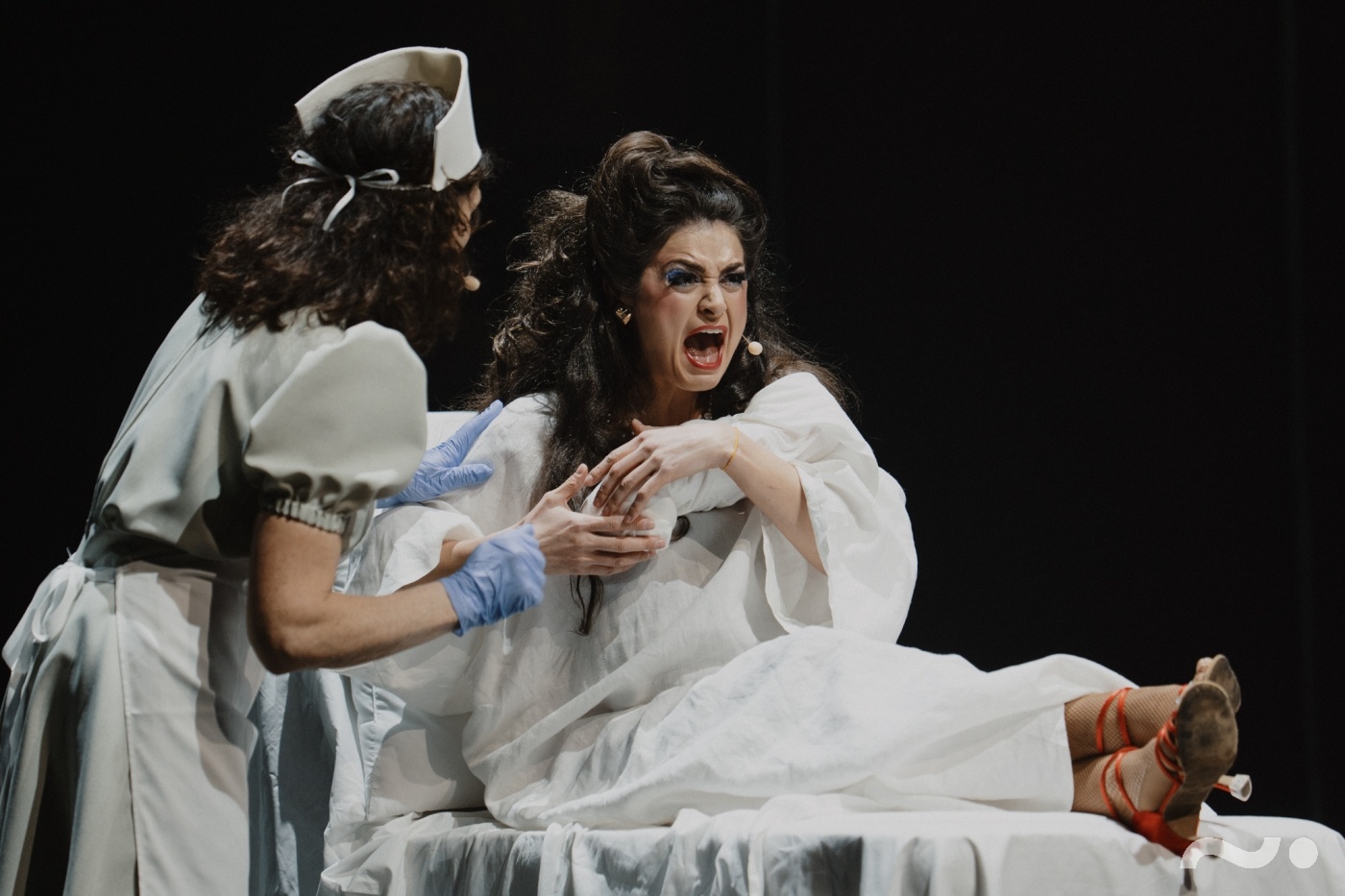
The opera invites the audience into an existential space where time, memory, and the inner poles of the human soul are revealed through the characters of two women—the White Woman and the Black Woman—and the Man. Here, sand becomes a metaphor for transformation, fragility, and the eternal flow of time, while the form of the chaconne serves as a symbol of repetitive movement and inevitable cyclicality. The participation of children and young performers plays a special role on stage, creating a multi-layered dialogue between generations and experiences.
By reviving the historical memory of Lithuania Minor and Klaipėda, the “Sand Chaconne” project creates exceptional cultural value for the city. Through symbols of sand, water, language, faith, and the fragility of existence, the performance highlights the coastal identity, reinforcing Klaipėda’s distinctive cultural narrative.
The fusion of Germanic and Baltic-Prussian traditions allows the city to present its multicultural heritage in an international context, while the intimate format engages diverse audiences in various venues. This is a professional, original production that fosters pride in local heritage and strengthens Klaipėda’s cultural identity over the long term.
The leading roles are played by:
The White Woman – Rita Petrauskaitė
The Black Woman – Ernesta Stankutė
The Man – Gytis Šimelionis
Also appearing on stage are students from the Klaipėda Children’s Opera Studio and the “Baleto erdvė” Ballet and Contemporary Dance Studio, who enrich the narrative with movement, choral scenes, and choreographed sequences.