"The Lesson"

Description
“THE LESSON” (directed by Rolandas Kazlas)
A one-act play by Eugene Ionesco
Starring: Rolandas Kazlas, Audronis Rūkas, Taura Kvietinskaitė
ROLANDAS KAZLAS INVITES YOU TO “THE LESSON”*
A mystery** of education, science, culture, and health; a drama about teaching; a comedy; a tragedy; therapy; Wikipedia***; and other absurdities****—all in the premiere performance of “The Lesson.” Based on the play of the same name by French playwright Eugene Ionesco.
The play—“The Lesson”—is for those who want to find out what chalk was (and still is) eaten with. Without a breather or an intermission… The duration of “The Lesson” will depend on the student’s knowledge, abilities, willingness or unwillingness to learn, and on the teacher’s mood and patience, which in turn will depend on the student’s knowledge, abilities, willingness or unwillingness to learn, as well as the teacher’s…
And since “The Lesson” promises to be fun, playful, interesting, and useful—which is certainly to be expected—three very distinctive, intriguing actors from different generations will meet on stage: Taura Kvietinskaitė (Student); the expressive actor Audronis Rūkas (School Staff); and the play’s director, Rolandas Kazlas, who plays the role of the teacher and always manages to pleasantly surprise the audience. Neringa Keršulytė serves as the leader of the art club and “living corner,” as well as the costume designer.
The Romanian-born French playwright Eugene Ionesco (1909–1994) is considered one of the pioneers of the theater of the absurd and one of the most significant playwrights of the 20th century. His most notable examples of the theater of the absurd include the tragicomedy *The Bald Soprano* (*La Cantatrice chauve*, 1950), *The Lesson* (*La Leçon*, 1951), as well as *The Chairs* (*Les Chaises*, 1952) and *Rhinoceros* (*Rhinocéros*, 1959). His one-act plays are full of illogical situations, clichés, and hyperbolically polite dialogue. By mocking banality, he reveals the absurdity of human existence. The playwright himself called them “anti-plays.”
Director Rolandas Kazlas shares his thoughts on the premiere of “The Lesson”: “Although the plays of the French playwright E. Ionesco are considered plays of the absurd, to tell the truth, I don’t see any absurdity in them. In real life, in everyday life, in people’s thinking, in communication, or in any other sphere, there is far more absurdity, and it is much funnier, more painful, and more cruel. The text of the play itself is like a carnival costume—a jester’s or clown’s outfit—covering the real body: that of a person, society, nations, humanity… One can sense that, through his juggling of words, his balancing acts, his absurd phrases, and what seems like nonsense, the playwright urges us to see and discern serious matters. In E. Ionesco’s one-act play *The Lesson*—described by the playwright himself as a comic drama—there is plenty of comedy, drama, and even a hint of tragedy. In short, the play has everything needed for a good performance, and it’s no wonder the playwright titled it so simply and precisely—“The Lesson.” Lessons left unlearned often have painful consequences. Life’s exams and tests are harder and more serious trials, and even the strictest teacher at school may turn out to be just a “gentle lamb” compared to those “Teachers” who want to teach everyone and the whole world at once—and such people, unfortunately, appear from time to time, and, as we know, have never been in short supply throughout human history.
I believe the playwright is talking about how important it is to learn, to know, to be skilled, to understand, to listen, to be alert, attentive, and lively—to strive for something, to improve oneself—and how dangerous it is to be ignorant, uneducated, uncultured, indifferent, illiterate, uninterested in anything, and seeking from a teacher or educational institution only a grade, a certificate, or a diploma…
Who might find the play *The Lesson* interesting? “First of all, I think, those who want to learn and teach, as well as those who don’t want to learn or teach. For those who spell the word ‘absurd’ with a ‘b,’ and those who spell the same word with a ‘p’—‘apsurd.’ And for those who spell the word ‘theater’ with an ‘a,’ and those who spell it ‘tetras,’ without the ‘a.’ No big deal, but… everything does start with ‘A…’ after all.
“Those who know nothing know the most.”
The Teacher
*lesson – the knowledge conveyed by a teacher to students, the activities of students and the teacher (i.e., the application of acquired or existing knowledge, the development or refinement of skills).
**mystery play – a genre of drama in which the problems of the fate of humanity, a nation, or an individual are addressed through symbolic, stylized imagery.
***Wikipedia – an online encyclopedia that anyone can read, improve, and contribute to without any restrictions. Its Lithuanian-language pages already contain more than 197,000 articles, so you can read all of the information provided above there.
****Absurd (Latin absurdus – senseless, incongruous, unpleasant); in ethics, the experience of meaninglessness and the denial of the value of existence. The feeling and mindset of absurdity are best expressed in French existential philosophy, literature, and theater (J.-P. Sartre, A. Camus, A. Malraux, E. Ionesco, S. Beckett).
Event duration: 1 hour 40 minutes
Doors open 1 hour before the event
Children are not admitted free of charge
No discounts apply
To purchase more than 20 tickets, please contact [email protected]
Event organizer: Teatro dienos, Public Institution
Map
Other
More events
Event
"Tip top"
Event
"Two Little Ladies Heading North"

Event
"That's How a Star Was Born"
Event
"Seniors"
Theatre
"Power and Glory"
Event
"Marital Games"
Event
“Stand-up: Meaning and Meaninglessness” (No. 16)
Event
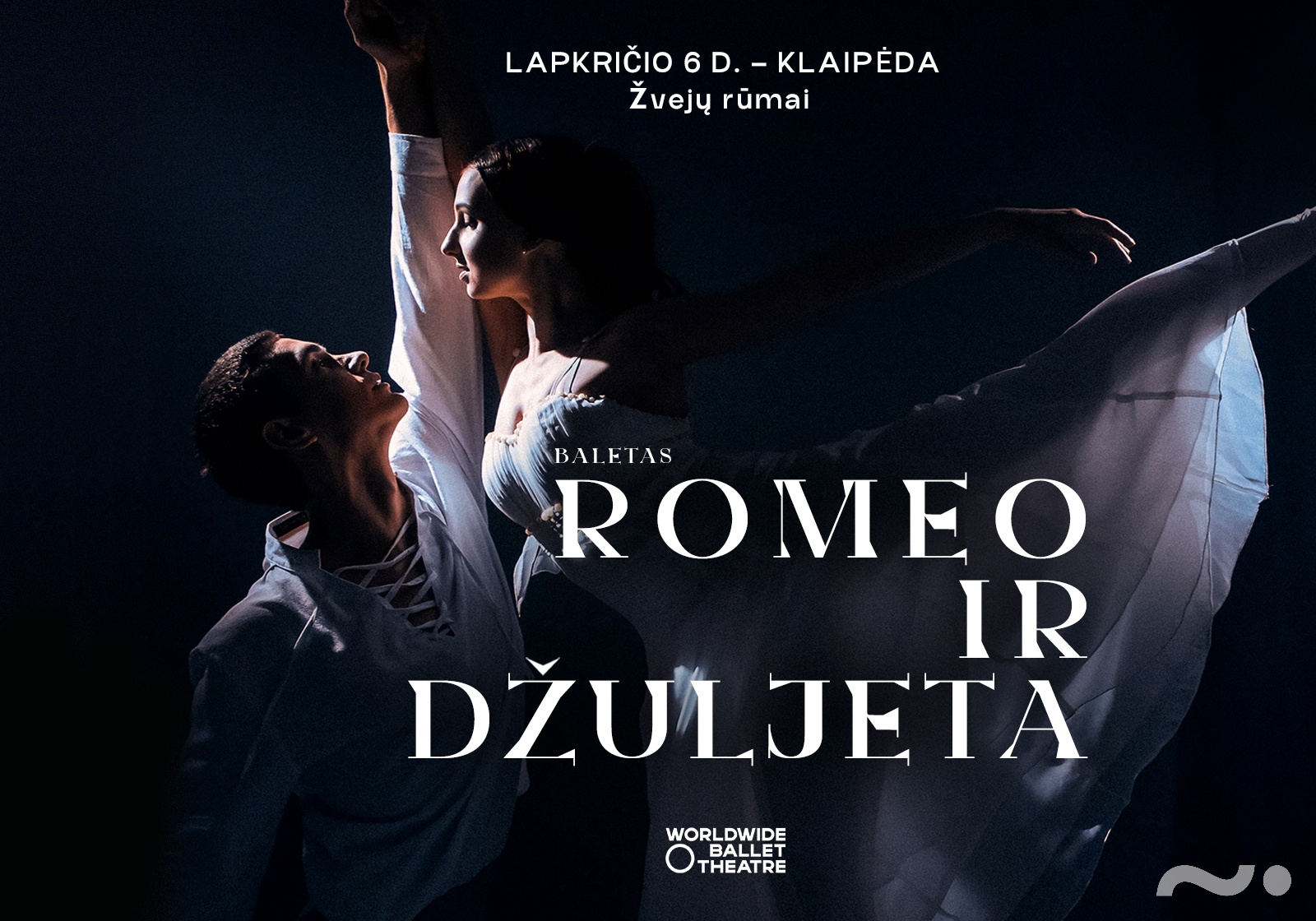
"Romeo and Juliet"
Event
"I am a doctor"
Event
"Free Butterflies"
Theatre
"The Missing Notes" (Premiere)
Event