
"Richard III" (premiere)
Description
ARTŪRAS AREIMA THEATER
“RICHARD III” (Premiere)
A two-act play based on the play by William Shakespeare
Director: Artūras Areima
Assistant Director: Rokas Naudžius
Set Designer: Oles Makukhin
Choreographer: Sigita Juraškaitė-Baužienė
Costume Designer: Valdemara Jasulaitytė
Costume Designer’s Assistant: Polina Nimrea
Lighting Designer: Eugenijus Sabaliauskas
Video Artist: Kristijonas Dirsė
Composer: π (Monika Poderytė)
Sound Director: Edvinas Vasiljevas
Political Consultant: Vytis Silius
Starring Karolis Maiskis, Samanta Pinaitytė, Monika Poderytė, Eglė Špokaitė, Regina Arbačiauskaitė, Juozas Bindokas, Vidas Jakimauskas, Pijus Ganusauskas, Rokas Petrauskas, Valerijus Kazlauskas, Anicetas Gendvilas, Kęstutis Bručkus, Gytis Mikšys
Photographers: Laura Vansevičienė, Gediminas Vansevičius
The project is funded by the Lithuanian Council for Culture
A man who conquered not a nation, but the human consciousness. “The greatest power is not to force a person to obey. The greatest power is to make him want to obey.” This play is not about the King of England. It is not about politics. It is not about history. It is not about evil. It is about the human psyche. Because every political system is first born in the human mind. Before a dictator can emerge, there must first be a person willing to believe in him. Before propaganda can emerge, there must be a person for whom the truth becomes too heavy a burden. Before Richard can emerge, there must be a society that grows weary of being free. That is why this play is not about a single monster. It is about us. The Desire for Power: When Powerlessness Becomes Power Why does a person desire power?
Friedrich Nietzsche argued that man is driven by the will to power. This idea is often misunderstood. It is not merely the desire to rule over others. It is the desire to overcome one’s own powerlessness. Richard is not born of strength. He is born of humiliation. His childhood is marked by rejection. He has never experienced unconditional love. Therefore, he decides: if I cannot be loved, I will be feared. This is the classic transformation of trauma into power. Alfred Adler called this mechanism “compensation for an inferiority complex.” A person who deeply doubts himself often seeks absolute control.
That is why Richard was not born evil. He is a man who can no longer bear his own pain and decides to project it onto the world. A narcissist who hates his own reflection. According to Sigmund Freud’s theories, Richard lacks a stable ego. More precisely, he has never managed to form a coherent “I.” His entire life, he has been searching for his reflection in the eyes of others. That is why he needs an audience. He needs a court. He needs enemies. He needs people. Not because he loves them, but because without them he does not exist. A narcissist is not someone who loves himself. He is someone who cannot stand himself. That is why he is constantly searching for mirrors. And the government becomes the greatest of them all.
Michel Foucault: Power Without Violence
In ancient times, a king would be beheaded. Today, he writes a new communication strategy. Michel Foucault wrote that modern power has become invisible. It does not merely punish—it shapes. It creates norms. It decides what is beautiful, what is success, what is love, what is patriotism, what constitutes a healthy person, what a normal body is, and what opinions are acceptable. That is why the modern Richard, first and foremost, controls language.
Byung-Chul Han: Psychopolitics
Today, no one forces us to work. We exploit ourselves.
We become projects. We constantly improve ourselves. We measure our steps. We count calories. We monitor our productivity. We create an image. We sell ourselves. Richard doesn’t even need to enslave us. We come to him of our own accord.
René Girard: Why Does Society Need a Scapegoat?
René Girard argues that human communities stabilize by finding a scapegoat. When society is in crisis, it does not look for the cause of the problem. It looks for a person. A migrant. A foreigner. The weak. The dissenter. A traitor. By sacrificing one person, everyone feels a brief sense of relief. That is why Richard constantly creates enemies. Not because he needs them. But because without enemies, his power would crumble.
Hannah Arendt: The Banality of Evil
This is one of the play’s most important themes. Evil almost never comes screaming. It comes politely. In a suit. With a diploma. With a smile. With a PowerPoint presentation. With a KPI (Key Performance Indicator). A KPI is a metric that helps assess progress toward goals or results. In other words, if you have a specific goal, KPIs show whether you’re moving in the right direction and how much more needs to be done. In English, this is called a KPI—*Key Performance Indicator*. Evil comes with concern. A person becomes a monster not because they hate. They become a monster because they stop thinking.
Slavoj Žižek: The Triumph of Ideology
Slavoj Žižek states: “The greatest triumph of ideology occurs when a person says, ‘I know this is a lie. But I live by it anyway.” This is the tragedy of our times. We no longer believe in propaganda. But it still shapes us.
Doors open 1 hour before the event
Event duration: ~3 hours (one intermission)
Children are not admitted free of charge
Age restriction: 16 and older
No discounts apply
For more information, call +370 686 99699; [email protected]
Organizer: Elektrinė samana, Public Institution
Map
Other
MonTueWedThuFriSatSun
Upcoming dates
Cancelled
Organizer
Žvejų rūmai
More events
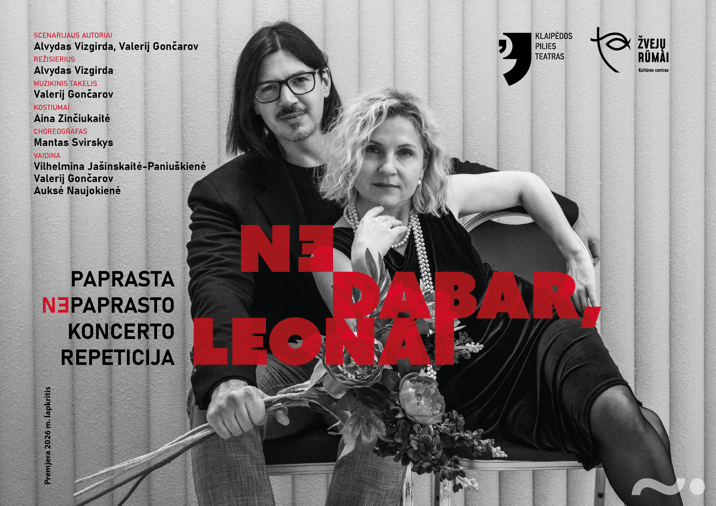
Event
"Not Now, Lions" (premiere)

Event
"Marital Games"

Concert
A Concert Featuring Celine Dion's Most Beautiful Songs
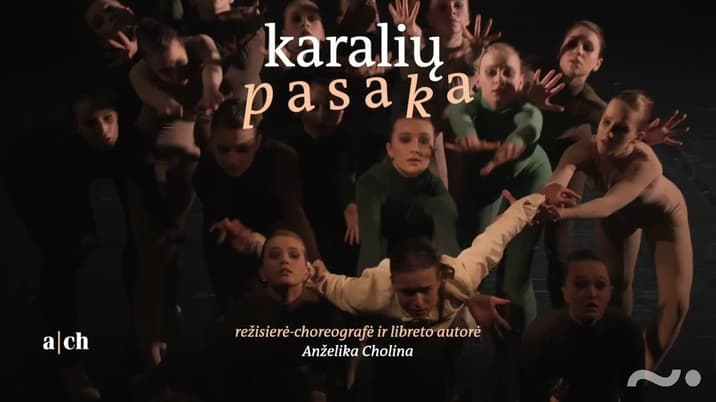
Event
"The King's Tale"
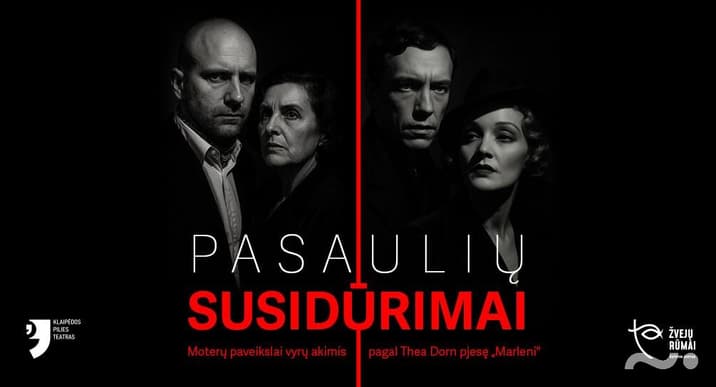
Event
"Clash of Worlds"

Event
"The Butterfly Circus"

Event
"KAKĖ MAKĖ AND THE GREATEST TREASURE" (Premiere)

Event
"The Little Prince: A Journey Through Seven Planets"

Event
"Hello, Queen Winter"
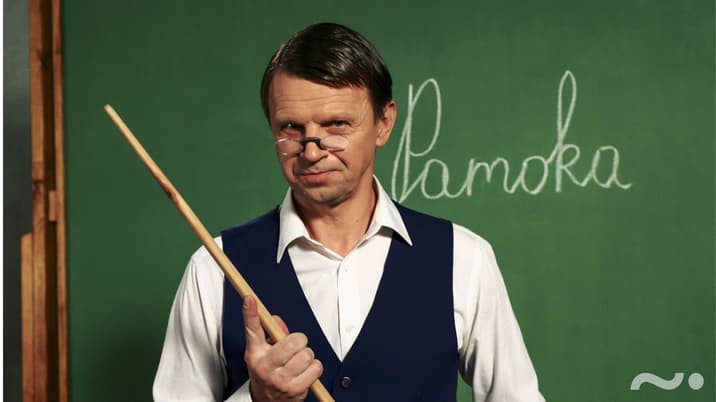
Event
"The Lesson"
Event
"Otherwise"

Event